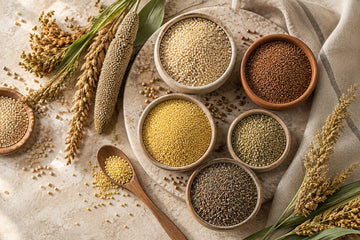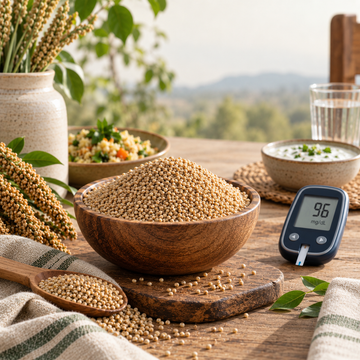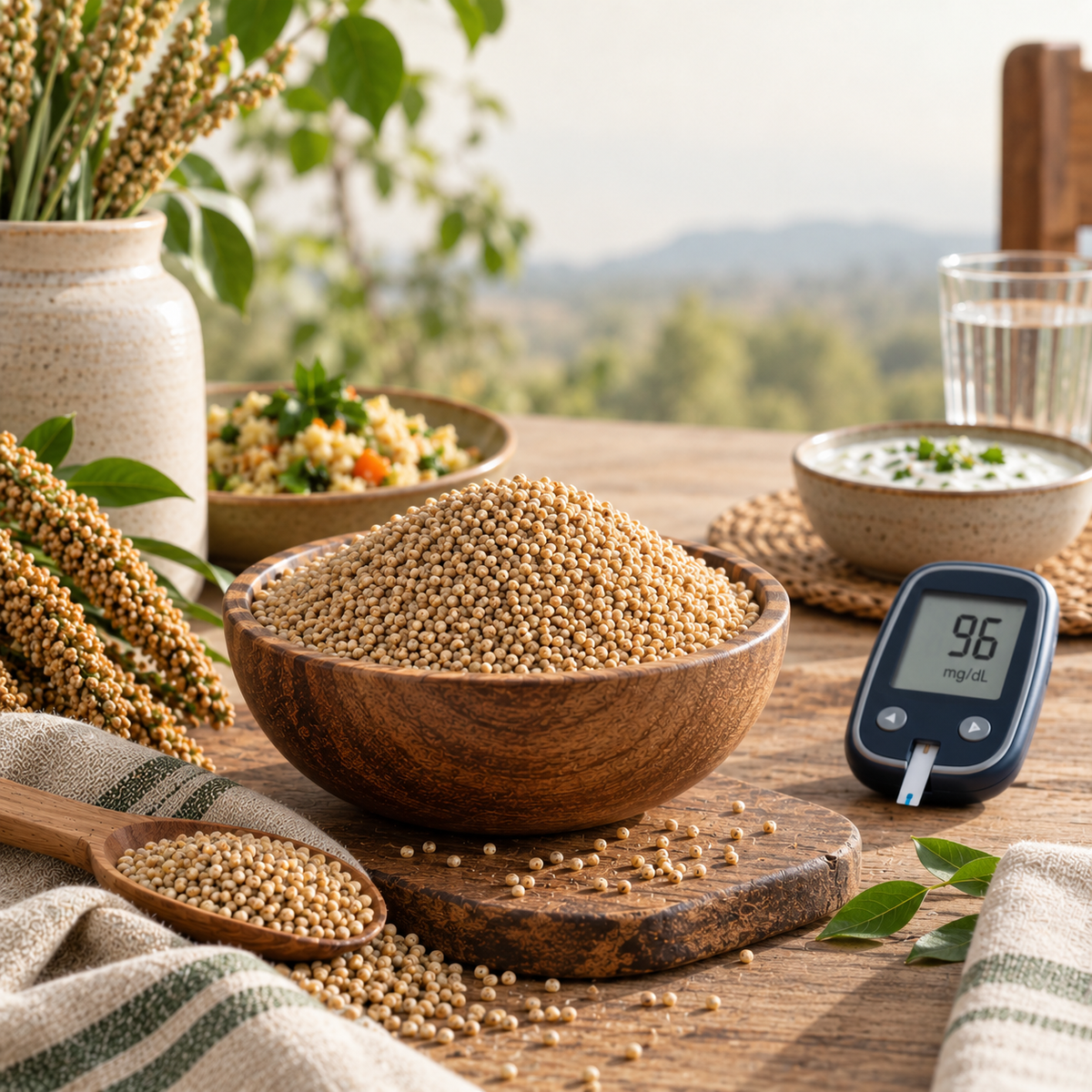
Kodo millet (Kodon) is one of India's traditional grains. It has been used as a food source in different regions of India for centuries. In today's time, when people are returning to healthy and balanced eating, Kodo millet is once again becoming popular among people. For those managing diabetes, along with the quantity of carbohydrates in a meal, its quality and the balance of the meal are also important. Kodo millet contains dietary fiber and other nutrients, so it can be made a part of a balanced and diabetes-friendly diet. The purpose of Dhanshakti – The Wonder Millets is to deliver India's traditional millets to modern families in a clean, safe, and convenient form.
What is Kodo millet?
Kodo millet is a small-grained traditional cereal that has been cultivated in India for a long time. It is known by different names in different states. Many delicious dishes can be made from it, such as:
Kodo millet rice
Khichdi
Pulao
Upma
Millet Dosa
Porridge
Millet bowl
This makes it an easy option to include in daily meals.
Why can Kodo millet be useful in a diabetes-friendly diet?
1. A good source of dietary fiber
Fiber is an important part of a balanced diet. It affects the digestive process and can help slow down the absorption of carbohydrates from food. Kodo millet naturally contains dietary fiber, so it can be included in meals as an alternative to refined grains.
2. A nutritious alternative to refined grains
Today, many food items are available in highly processed or refined forms. In contrast, whole grains retain more of their natural nutrients. Kodo millet can be used in place of rice in many traditional dishes.
3. Provides complex carbohydrates
Carbohydrates are an important source of energy for the body. But not only the quantity of carbohydrates, but the entire nutritional profile of the meal is also important. Kodo millet provides fiber and other nutrients along with carbohydrates. Eating it with lentils (daal), vegetables, salads, and protein-rich foods can make the meal more balanced.
4. Adds variety to meals
Instead of eating the same grain every day, including different millets and whole grains in your diet can bring variety. You can try Kodo millet instead of rice on some days of the week.
What is the difference between Kodo millet and white rice?
Both Kodo millet and rice can be part of a balanced diet. But whole Kodo millet has dietary fiber and a different nutritional profile, whereas polished white rice has relatively less fiber content. In terms of diabetes management, just changing the grain is not enough. Portion size, the complete meal, physical activity, and an individual's personal glucose response are also important. Therefore, the goal should not be to completely stop rice, but to develop the habit of balanced eating.
How to eat Kodo millet?
It is better to eat Kodo millet as part of a balanced meal. For example: Kodo millet + lentils + green vegetable + salad, this combination can include carbohydrates, plant protein, fiber, and various nutrients together. You can also add curd, lentils, sprouts, or other protein sources as per your preference.
Does Kodo millet cure diabetes?
No. Kodo millet is not a medicine and should not be considered a cure or treatment for diabetes. For a person suffering from diabetes, the overall diet, quantity of food, physical activity, medications, and personal health condition are important. If you have diabetes, it is advisable to consult a doctor or a qualified dietitian before making major changes to your diet.
Why choose Dhanshakti's Kodo millet?
At Dhanshakti – The Wonder Millets, our endeavor is to reach modern customers with India's traditional millets with better quality and convenient packaging. We pay special attention to these aspects in the processing of our products:
Selection of good quality raw material
Proper cleaning
Hygienic and controlled processing
Safe handling
Better packaging
Consistency in product quality
Our goal is not just to sell millets, but to reconnect Indian families with traditional and nutritious grains.
How to include Kodo millet in daily meals?
You do not need to change your entire diet suddenly to include Kodo millet in your diet. You can start by including Kodo millet in your meals once or twice a week.
Some easy options:
Breakfast: Kodo millet Upma Lunch: Kodo millet rice + lentils + vegetable Dinner: Vegetable Kodo millet Khichdi Healthy Bowl: Cooked Kodo millet + vegetables + lentils/pulses + curd. The most important thing is—balance, variety, and proper quantity.
Frequently asked questions
Can a person with diabetes eat Kodo millet?
Kodo millet can be included in a diabetes-friendly diet. It contains fiber and is a whole grain option. However, the quantity and the balance of the entire meal are important.
Can Kodo millet be used in place of rice?
Yes. Kodo millet can be cooked like rice and used in many dishes.
Does Kodo millet contain carbohydrates?
Yes. Kodo millet contains carbohydrates. Therefore, it should not be considered a carbohydrate-free food.
Can one eat Kodo millet every day?
It can be made a regular part of a balanced diet. However, including different millets and whole grains in the meal adds variety to the diet.
Is Kodo millet gluten-free?
Kodo millet is naturally gluten-free. However, people with severe sensitivity to gluten or celiac disease must check information regarding cross-contamination during packaging and processing.
Conclusion
Kodo millet is not just a traditional grain, but can be a useful part of a modern balanced diet. The fiber and other nutrients present in it and its versatile utility make it a good option to include in daily meals. For diabetes management, it should be seen not as a sole solution, but along with a balanced diet, proper portions, vegetables, protein, and regular physical activity.
🌾 Dhanshakti – The Wonder Millets
From tradition to nutrition, bringing Indian millets to your family's plate. Make the diversity of Indian millets a part of your daily meals with Dhanshakti – The Wonder Millets. Learn about our millet products today and take a better step towards healthy eating.