

Intelligent Nutrition for Diabetes Care
Switching to slow-release, sprouted multi-millet flour helps regulate daily glucose levels while keeping your traditional meals wholesome and delicious.
Low Glycemic Index
Slows down the digestion rate, preventing sharp post-meal blood sugar surges and supporting stable long-term HbA1c control.
Germinated & Sprouted
Soaking activates natural enzymes to breakdown phytic acid, making complex minerals like Magnesium and Zinc easy to absorb without bloating.
Satiety & Weight Care
Rich in complex soluble dietary fibers that keep you feeling full longer, reducing unwanted sugar cravings throughout the afternoon.
*Disclaimer: Dhanshakti sprouted millet products are intended for dietary support and daily wellness. They are not intended to diagnose, treat, or replace medical advice. Please consult your physician for personalized diabetic management plans.

We've all heard the old saying "You are what you eat", and it's still true. A balanced nutritive diet is the mantra to good health. In recent times people are becoming conscious of the consumption of balanced and nutritional diet leading to a healthy lifestyle. Millet grains have been the traditional component of food basket in India. So why not include it in the daily diet, eat right (eatrite) and stay healthy!
Millets are nutri-cereals comprising of sorghum, pearl millet, finger millet (major millets) foxtail, little, kodo, proso and barnyard millet (minor millets). These are one of the oldest foods known to humanity. These are one of the several species of coarse cereal grasses in the family Poaceae, cultivated for their small edible seeds. They are highly nutritious, non-glutinous and not acid forming foods. Hence they are soothing and easy to digest.
They contain high amounts of dietary fibre, B-complex vitamins, essential amino and fatty acids and vitamin E. They are particularly high in minerals, iron, magnesium, phosphorous, potassium and release lesser percentage of glucose over a longer period of time causing satiety which lowers the risk of diabetes. These grains are high in carbohydrates, with protein content varying from 6 to 11 percent and fat varying from 1.5 to 5 percent.
Millets are typically annuals and range in height from 30 to 130 cm with the exception of sorghum and pearl millet, which has stalks 1.5 to 3 m tall and about 2.5 cm thick. The inflorescences may be spikes or racemes, in which the flowers are borne on stalks of about equal length along an elongated axis, or panicles with dense clusters of small florets. With the exception of pearl millet, seeds remain enclosed in hulls after threshing. Hulled seeds are usually creamy white.
In India, millets has been a staple diet and a main source of income for farmers especially in the semi-arid regions. They are important food and fodder crop in the semi-arid tropics (SAT) of the world and grows in both kharif and rabi seasons. These grains represent the major source of dietary energy and protein for more than a billion people in the semi-arid tropics.
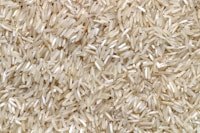
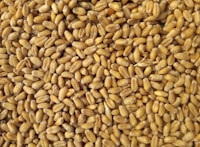
A N N E X U R E - I
The nutritional importance of sorghum and other millets cannot be underestimated. Regular millet consumption reduces the incidence of cardiovascular, gastrointestinal and lifestyle (diabetes) diseases. To popularize the millet consumption, it is important to understand the nutritional health benefits of millets. However the data on the nutritional composition of millets is scanty. Hence an attempt is made to compile brief grain structure and nutritional profile of different millets as described below.
1. Structure of millet grain
The millet kernels differ from grain to grain but are mainly a covered or naked/utricle caryopsis and consists of three main anatomical parts, namely the, pericarp (outer layer), endosperm (storage tissue) and germ (embryo). In sorghum the proportion of these amounts about with their seed mass at about 6%, 84%, and 10% respectively. However, the relative proportion of these components varies with relative proportions depending on the cultivars and environmental conditions. The outer layer or the pericarp originates from the ovary wall and is divided into three histochemical tissues: the epicarp, mesocarp and endocarp. Sorghum is the only cereal grain known to have starch in the mesocarp layer of pericarp.
The endosperm is composed of the aleurone layer, the peripheral, corneous and floury areas. The corneous and floury endosperm cells are composed of starch granules, a protein matrix, protein bodies, and cell walls rich in cellulose, β-glucans, and hemicelluloses. Endosperm happens to be the main storage tissue. The starch granules are polygonal and often contain dents from the protein bodies.
The size of starch granule varies from 4 µm to 25 µm. The proportion ratio of corneous to floury endosperm ratio determines the kernel texture in terms of grain hardness; the, higher the corneous portion, the harder will be the kernel and vice versa. The corneous portion will be translucent whereas the floury layer will be opaque. The aleuronic tissue is made up of thick cell walls and happens to be a rich source of protein, oil and minerals. The enzyme proteins are also mostly located in this tissue. The germ consists of the embryonic axis and, scutellum and it contains reserve nutrients and serves as the bridge or connecting tissue between the endosperm and germ. The embryo is a very good source of protein, minerals, oil and vitamins.
2. Chemical and nutritional composition of millet grain
The millet grain is rich in fiber and minerals has sufficient quantity of carbohydrates (60.9-72.6%), protein (6.22-11.6%) and fat (1.12-4.7%). Starch is the major constituent of the grain. The grain contains protein, albumin, globulin, prolamin and glutelin. Millets do not contain gluten and its slower hydrolysis makes it attractive to diabetics, celiac and ethnic groups. Particularly in developed countries, there is a growing demand for gluten free foods from people with celiac disease and other intolerance to wheat.
Though millets nutritionally superior, its consumption has been decreased gradually due to the non-availability of processed clean grain in markets. To increase millet consumption among the urban population, development of processing technologies is a prerequisite. As a step towards this, under the NAIP project, IIMR has taken up the millet processing, and developed value added millet products. Around 30 machineries for different processes were procured and retrofitted.
Millets have unique nutrients value which is good for physical and mental health. They have high fibre content, low sugar, vitamins and minerals and if consumed regularly they promote movement of the bowels, help detoxify the system, renders less blood sugar and cholesterol than eating fine flour or rice.
| Millets/Cereals | Carbo-hydrates(g) | Protein (g) | Fat (g) | Energy (Kcal) | Crude fibre (g) | Mineral matter (g) | Ca (mg) | P (mg) | Fe (mg) |
|---|---|---|---|---|---|---|---|---|---|
| Sorghum | 72.6 | 10.4 | 1.9 | 349 | 1.6 | 1.6 | 25 | 222 | 4.1 |
| Pearl millet | 67.5 | 11.6 | 5 | 361 | 1.2 | 2.3 | 42 | 296 | 8 |
| Finger millet | 72 | 7.3 | 1.3 | 328 | 3.6 | 2.7 | 344 | 283 | 3.9 |
| Foxtail millet | 60.9 | 12.3 | 4.3 | 331 | 8 | 3.3 | 31 | 290 | 2.8 |
| Proso millet | 70.4 | 12.5 | 1.1 | 341 | 2.2 | 1.9 | 14 | 206 | 0.8 |
| Kodo millet | 65.9 | 8.3 | 1.4 | 309 | 9 | 2.6 | 27 | 188 | 0.5 |
| Little millet | 67 | 7.7 | 4.7 | 341 | 7.6 | 1.5 | 17 | 220 | 9.3 |
| Barnyard millet | 65.5 | 6.2 | 2.2 | 307 | 9.8 | 4.4 | 20 | 280 | 5 |
| Rice (raw, milled) | 78.2 | 6.8 | 0.5 | 345 | 0.2 | 0.6 | 10 | 160 | 0.7 |
| Wheat (whole) | 71.2 | 11.8 | 1.5 | 346 | 1.2 | 1.5 | 41 | 306 | 5.3 |
| Cereals/Millets | Mg | Na | K | Cu | Mn | Mb | Zn | Cr | Si | Cl |
|---|---|---|---|---|---|---|---|---|---|---|
| Foxtail millet | 81 | 4.6 | 250 | 1.40 | 0.60 | 0.070 | 2.4 | 0.030 | 171 | 37 |
| Proso millet | 153 | 8.2 | 113 | 1.60 | 0.60 | - | 1.4 | 0.020 | 157 | 19 |
| Finger millet | 137 | 11.0 | 408 | 0.47 | 5.49 | 0.102 | 2.3 | 0.028 | 160 | 44 |
| Little millet | 133 | 8.1 | 129 | 1.00 | 0.68 | 0.016 | 3.7 | 0.180 | 149 | 13 |
| Barnyard millet | 82 | - | - | 0.60 | 0.96 | - | 3 | 0.090 | - | - |
| Kodo millet | 147 | 4.6 | 144 | 1.60 | 1.10 | - | 0.7 | 0.020 | 136 | 11 |
| Sorghum | 171 | 7.3 | 131 | 0.46 | 0.78 | 0.039 | 1.6 | 0.008 | 54 | 44 |
| Pearl millet | 137 | 10.9 | 307 | 1.06 | 1.15 | 0.069 | 3.1 | 0.023 | 147 | 39 |
| Rice | 90 | - | - | 0.14 | 0.59 | 0.058 | 1.4 | 0.004 | - | - |
| Wheat | 138 | 17.1 | 284 | 0.68 | 2.29 | 0.051 | 2.7 | 0.012 | 128 | 47 |
| Millets | Thiamin (mg) | Niacin (mg) | Riboflavin | Vitamin A (carotene) (mg/100g) | Vit B6 (mg/100g) | Folic Acid (mg/100g) | Vit B5 (mg/100g) | Vit E (mg/100g) |
|---|---|---|---|---|---|---|---|---|
| Foxtail millet | 0.59 | 3.2 | 0.11 | 32 | - | 15 | 0.82 | 31 |
| Proso millet | 0.41 | 4.5 | 0.28 | 0 | - | - | 1.2 | - |
| Finger millet | 0.42 | 1.1 | 0.19 | 42 | - | 18.3 | - | 22 |
| Little millet | 0.3 | 3.2 | 0.09 | 0 | - | 9 | - | - |
| Barnyard millet | 0.33 | 4.2 | 0.1 | 0 | - | - | - | - |
| Kodo millet | 0.15 | 2 | 0.09 | 0 | - | 23.1 | - | - |
| Sorghum | 0.38 | 4.3 | 0.15 | 47 | 0.21 | 20 | 1.25 | 12 |
| Pearl millet | 0.38 | 2.8 | 0.21 | 132 | - | 45.5 | 1.09 | 19 |
| Rice | 0.41 | 4.3 | 0.04 | 0 | - | 8 | - | - |
| Wheat | 0.41 | 5.1 | 0.1 | 64 | 0.57 | 36.6 | - | - |
A N N E X U R E - I I
The common element in all sectors of food processing is the conversion of raw material into a product of higher value. For millets, this requires selectively separating structural components—the nutrient-dense germ, endosperm, and outer hull layer—to elevate digestibility, culinary versatility, and shelf stability while preserving baseline micronutrients.
1. Overview of Millet Processing
Millet processing involves partial separation and modification of the grain's constituents. Traditional processing methods (like manual decortication, roasting, and pounding) tend to be labor-intensive and often produce variable grain quality. Modern, standardized processing overcomes these limitations, refining raw grains into premium flours, semolina, and cold-extruded products.
a) Primary Processing
Cleansing and preparing raw grains through cleaning, grading, destoning, and dehulling. This crucial step removes husk and foreign particles, ensuring grain purity and extending storage potential without degrading quality.
b) Secondary Processing
Converting cleaned grains into modern ready-to-cook (RTC) and ready-to-eat (RTE) formats. This includes milling fine multi-millet attas, crafting semolina (suji), and producing cold-extruded items like millet pasta and vermicelli.
2. Importance of Processing Intervention
Non-availability of convenient RTE and RTC millet products in consumer markets has historically contributed to declining consumption. Manual dehulling often leaves residual husk, making it difficult to yield soft, consistent flours for daily rotis.
Key Objective: Modern processing techniques bridge the gap between traditional nutrition and modern lifestyle convenience—providing shelf-stable, easy-to-digest grains that preserve vital bioactive compounds.
Advanced processing technologies remove the manual effort previously needed to prepare millets. By refining grain processing, millets easily integrate into urban kitchens without compromising on texture, flavor, or preparation speed.
3. Processing & Value-Added Products
Value-addition in grain processing plays an essential role in functional nutrition. Refining raw grains via gentle, low-cost technologies preserves essential health-promoting nutrients while ensuring extended freshness and optimal taste.
4. Processing of Millet Grains
By implementing modern machinery retrofitted specifically for small-grain millets, contemporary food processing removes common cooking inconveniences. Standardized temperature controls and mechanical dehulling deliver consistent, nutrient-rich millet products tailored for everyday health-conscious consumers.
Primary and secondary processing methods have been developed and fine-tuned using those equipments to prepare good quality of millet processed products like multi grain atta, semolina, flakes, extruded products (vermicelli and pasta) & biscuits to improve the nutritional quality as well as the consumer acceptability of millet with improved shelf life.
Processing interventions is continuing to include all millets at IIMR to target at niche market as well as for mass marketing at the national level. Improved packing material is used for all millet products. IIMR has developed & commercialized millet products under the brand of eatrite solely to widen the commercialization of millet in the country. Further products from millets are in verge of being commercialized under the same eatrite brand.
4.1 Cleaning and grading of millet grain
After harvesting, grains needs to be dried to have optimum moisture content to store the grains safely without deterioration. Cleaning, grading and destoning of the millets are very important aspect of primary processing before the grains are subjected to the dehulling/de-husking to make them free from dirt, dust, stones and unwanted foreign matters.
Millet grain used to be cleaned manually and then milled but nowadays, while it may be cleaned as such at the household level, it is mostly done using a destoner machine.
The machine is integrated with:
- Aspirator
- Grader
Stones, metal pieces, glass, mud particles and other high-density impurities as well as straw, chaffs and such other low-density impurities are separated from millet in one operation. Even small and lightweight pebble of size of the grain can be separated, thus ensuring optimal cleaning.
4.2 Dehulling or pearling of millets
Dehulling is used to separate the anatomical parts of the grain as clearly as possible. This processing is necessary to remove mycotoxins on molded grain especially for kharif cultivars.

4.2.1 Equipment used for millet dehulling
(1) Sorghum and pearl millet dehuller
Dehuller unit is used to remove the coarse outer layer of millets (10%), which has less effect on nutritional quality. The breakage is nominal during dehulling. Fine flour produced from dehulled grain is used for the preparation of bakery foods, snack foods and instant mixes that resembles rice and wheat products in quality. Each millet has different dehuller machine as the seed coat varies for each millet. The unit for sorghum and pearl millet can dehull 10–15 kg grain per batch in 20 minutes.
The sorghum and pearl millet dehuller unit consists of:
- Grain hopper,
- Abrasive stones,
- Inspection door,
- Discharging door and
- Husk outlet.
The grain is dropped in the feeder, enters the dehulled chamber where the grinding stones dehull the grain. Through the inspection door the grain can be checked for dehulling quality. Then the grain is released from discharging door which is at the bottom of the machine.
(2) Small millet dehuller
The unit for small millet can continuously dehull upto 20–25 kg per hour grain per batch in 20 minutes.
The small millet destoner cum dehuller unit consists of:
- Grain hopper,
- Centrifugal dome dehulling chamber,
- Grain discharge,
- Husk outlet,
- Aspirator and
- Grader.
The grain is dropped in the feeder, enters the centrifugal dome dehulled chamber where the centrifugal rotating dome causes dehulling of the grain. Through grain outlet the grain is released which is graded through the grader at the bottom of the machine. The husk is removed through the husk outlet.


| S.no. | Nutrients (100 g) | Amount |
|---|---|---|
| 01 | Energy (kcal) | 349.0 |
| 02 | Carbohydrates (g) | 78.5 |
| 03 | Protein (g) | 8.6 |
| 04 | Fat (g) | 2.3 |
| 05 | Riboflavin (mg) | 0.02 |
| 06 | Folic acid (mg) | 2.2 |
| 07 | Calcium (mg) | 12.1 |
| 08 | Iron (mg) | 3.3 |
| 09 | Zinc (mg) | 0.9 |
| 10 | Magnesium (mg) | 82.1 |
| 11 | Chromium (mg) | 1.0 |
| S.no. | Nutrients (100 g) | Flour | Rawa |
|---|---|---|---|
| 01 | Energy (kcal) | 342.0 | 350.0 |
| 02 | Carbohydrates (g) | 75.0 | 77.8 |
| 03 | Protein (g) | 5.1 | 7.1 |
| 04 | Fat (g) | 2.4 | 1.2 |
| 05 | Thiamin (mg) | 2.3 | - |
| 06 | Riboflavin (mg) | 0.4 | 1.1 |
| 07 | Folic acid (mg) | 2.3 | 1.2 |
| 08 | Calcium (mg) | 10.0 | 5.8 |
| 09 | Iron (mg) | 8.4 | 5.1 |
| 10 | Zinc (mg) | 1.3 | 1.3 |
| 11 | Magnesium (mg) | 63.4 | 86.0 |
4.3 Milling of millets
Millets flour is made through milling technology. Milling is a process of separating the bran and germ from the starchy endosperm so that the endosperm can be ground into flour and rawa using different types of sieves in a hammer mill. The quality of the product was evaluated by preparing roti or other products. For example, millet semolina locally called as rawa or suji can be made in two forms with two different particle sizes, coarse 1.18 mm and fine 0.71 mm respectively. Both forms of rawa are commercially available in market. Rawa recovery ranges from 50-85% in case of coarse rawa and 40-75% in fine rawa and remaining 60-70% is flour. The recovery, however depends on the millet variety as well as the machinery used.
During milling process, there is a decrease in protein, riboflavin, zinc and calcium and an increase in carbohydrate and fat content.
4.3.1 Equipment used for milling millets
(1) Flour mill
Conventional flour mills have rotating blades (hammer/plate mill) or stones (chakki mill) which grind the grain in a grinding chamber and pass it through a screen which separates the flour from the larger, ungrounded particles during rotation, the flour is carried through the screen in the mill.
Flour mill consists of:
- Feed Hopper
- Adjustable feed gate
- Milling unit
- Product outlet
(2) Barbender junior equipment used for millet fine semolina
The unit removes 100% husk with breaking of grain into equal partials (fine rawa). The machine can produce 500 g of fine semolina in 5 minutes. Cost of the equipment is Rs. 16,00,000 and imported from Germany. The recovery of fine semolina is 92 percent.

Though millet has superior nutritional features, the consumption of this grain is limited due to non-availability of products which are easily prepared compared to rice and wheat products. Flour and semolina/rawa are products from which greater variety of foods can be prepared. The availability of semolina for the various millet preparations in the food markets is the other alternative for increasing millet consumption. The semolina prepared by IIMR resembles rice semolina in appearance and taste. Millet/sorghum semolina can be used for breakfast and snack food preparations replacing wheat and rice rawa.

4.4 Sorghum rich multigrain flour
Sorghum flour does not contain proteins that produce the viscoelastic gluten of wheat; therefore, acceptable yeast leavened products from 100% millet flour are difficult to obtain. However, sorghum flour in combination with other cereal grains such as wheat, finger millet, black gram dal / bengal gram / soya and fenugreek (methi) adds gluten to the produce. The level of millet substituted for wheat flour depends on the strength and quality of gluten in the wheat flour; the packing procedure; the definition of acceptable bread quality; the colour, particle size and shape of millet flour. The particle size and shape of millet flour often increase the grittiness of the baked products; however, tampering, attrition, milling, and other modifications during processing can modify the sandiness of the flour.
| S.no. | Nutrients (100 g) | Amount |
|---|---|---|
| 01 | Energy (kcal) | 353.0 |
| 02 | Carbohydrates (g) | 77.7 |
| 03 | Protein (g) | 6.6 |
| 04 | Fat (g) | 1.7 |
| 05 | Thiamin (mg) | 1.1 |
| 06 | Riboflavin (mg) | 2.1 |
| 07 | Folic acid (mg) | 2.5 |
| 08 | Calcium (mg) | 1.3 |
| 09 | Iron (mg) | 10.5 |
| 10 | Zinc (mg) | 1.2 |
| 11 | Copper (mg) | 35.0 |
| 12 | Magnesium (mg) | 76.5 |
4.4.1 Composition of millet rich multigrain flour
Multigrain flour is made from blended flours of cereals (millet, wheat), finger millet and pearl millet (bajra) along with soy-bean, a protein rich pulse. Such food meets the emerging nutritional needs of the people in the wake of preferences for modern and healthy food habits for mass feeding and social programme. While different grains have varied advantages, millet and other millets add minerals, dietary fiber and nutrients which are otherwise inadequate in normal roti made from wheat. Soya bean is a rich source of protein, and hence the mixer is based on health-promoting constituents. Addition of wheat to the dough makes it pliable and allows better shaping, retaining the original.
4.4.2 Equipment for roti making
(1) Automatic roti making machine
Currently, a small electrical roti making machinery is available in the market for ready to prepare rotis. This machinery helps to bake the roti but not to prepare the roti. The roti has to be done separately by roller. This type of roti making machinery is confined to home purpose only.
| S.no. | Nutrients (100 g) | Amount |
|---|---|---|
| 01 | Energy (kcal) | 327.0 |
| 02 | Carbohydrates (g) | 66.3 |
| 03 | Protein (g) | 5.0 |
| 04 | Fat (g) | 4.6 |
| 05 | Thiamin (mg) | 0.6 |
| 06 | Calcium (mg) | 16.2 |
| 07 | Iron (mg) | 6.0 |
| 08 | Zinc (mg) | 0.5 |
The automatic roti making machine completes the preparation of roti starting from making dough ball to ready to eat roti form. The capacity of automatic roti making machine is 1500 -2000 rotis per hour. Average size rotis of 36 per kg flour can be prepared in this machine.
Automatic roti making machine consists of:
- Starter point,
- Dough hopper / feeder (dough is prepared manually),
- Ball cutter with size adjuster, pressing and sheeting rollers and
- 3 rows of hot plates with each set point temperatures

(2) Millet roti-making machines
Jointly developed by IIMR in association with private entrepreneur.
Advantages and uniqueness of the roti machine:
- Used to make gluten-free roti conveniently with higher capacity.
- Removal of inconveniences in preparation of sorghum/millet based rotis.
| Features | Version 1 | Version 2 | Version 3 | Version 4 |
|---|---|---|---|---|
| Operation by | Foot | Hand | Hand | Hand |
| Space Required | More | Less | Less | Very Less |
| Capacity (rotis per/hr) | 40 | 50-60 | 80-100 | 50-60 |
| Speed (RPM) | Low (150) | Medium (200 rpm) | High (250 rpm) | Medium (200 rpm) |
| Cost | Rs 25 K | Rs 12 K | Rs 10 K | Rs 7 K |

4.5 Flaking of sorghum / millet grain
Flakes are popular snack food and have been widely produced for centuries. Rice flakes are produced and consumed throughout the world. Sorghum is a coarse grain and is difficult to pound. However, with the advent of technology, Edge runner (flaking machine) along with roaster has made it possible to produce flakes from sorghum. Sorghum flakes produced from the flaking machine resembles rice flakes and output is 50-60%.
| S.no. | Nutrients (100 g) | Amount |
|---|---|---|
| 01 | Energy (kcal) | 340.0 |
| 02 | Carbohydrates (g) | 79.7 |
| 03 | Protein (g) | 7.2 |
| 04 | Fat (g) | 1.8 |
| 05 | Thiamin (mg) | 0.4 |
| 06 | Riboflavin (mg) | 1.1 |
| 07 | Niacin (mg) | 1.9 |
| 08 | Folic acid (mg) | 1.6 |
| 09 | Calcium (mg) | 10.9 |
| 10 | Iron (mg) | 3.4 |
| 11 | Zinc (mg) | 0.8 |
| 12 | Magnesium (mg) | 68.9 |
4.5.1 Equipment used for the preparation of sorghum flakes
(1) Roaster
The roaster consists of circular tank which contains heat coils and feed hopper on top. The set temperature point is fixed to the machine. The roaster is preheated to 190 - 200 C before the grain is roasted. The grain dropped in the hopper enters the tank where grain is precooked and softened. The unit holds 3-5 kg grain per batch.
(2) Edge runner
The edge runner consists of flat circular rotator stone that presses the grain into flakes and supporter to control the grain while running the machine. The edge runner is run by 3HP motor. After roasting, the grain is transferred to edge runner where the roasted grain is pressed into flakes.

4.6 Millet Biscuits
The biscuit making machine consist of planetary mixture, cutting machine and convection oven. In preparation of biscuits, to reduce the drudgery, enhance biscuit quality and hygiene good manufacturing practices must be followed.
(1) Planetary mixer
Planetary mixer consists of:
- Kettle
- 2 blades (centre blade and edge blade)
- Kettle shifter
- Speed adjuster and height adjuster of blades
The capacity of the kneader is 12 kg per batch. The picture of dough kneader is shown in Fig 30.
(2) Rotary Oven
The technology 'rotary oven' is a worthy advancement over convection oven. In the conventional oven, the warmest air is not equally distributed and thus food at bottom tray/top tray than the food at centre racks. A rotary oven uses a built in fan which is located on the backside also trays are rotated. The purpose of the fan is to force the heated air faster inside the oven through the cavity and circulate it around the item being cooked.
| S.no. | Nutrients (100 g) | Amount |
|---|---|---|
| 01 | Energy (kcal) | 481.0 |
| 02 | Carbohydrates (g) | 64.6 |
| 03 | Protein (g) | 7.7 |
| 04 | Fat (g) | 23.7 |
| 05 | Thiamin (mg) | 0.2 |
| 06 | Riboflavin (mg) | 0.2 |
| 07 | Niacin (mg) | 1.9 |
| 08 | Folic acid (mg) | 0.5 |
| 09 | Calcium (mg) | 68.8 |
| 10 | Iron (mg) | 2.0 |
| 11 | Zinc (mg) | 1.7 |
| 12 | Magnesium (mg) | 92.2 |
4.7 Millet extruded products
Extruded products are ready-to-cook products which usually include vermicelli and pasta. The products are made with millet/sorghum flour or combinations of millet flour and semolina. There are two types of extruders in use: cold extruder and hot extruder.
4.7.1 Equipment used for millet extruded products
(1) Cold extruder
The machine structure is made entirely of pure and unalterable stainless steel. The main components of machine are:
- Upper tank motor and mixing shaft
- Automatic dough cutter with speed variator and stainless-steel blades
- Cooling blower for drying the product quality
- Stainless steel trolley on wheels

| S.no. | Nutrients (100 g) | Value |
|---|---|---|
| 01 | Protein (g) | 8.4 |
| 02 | Fat (g) | 1.4 |
| 03 | Carbohydrates (g) | 76.2 |
| 04 | Thiamine (mg) | 0.7 |
| 05 | Riboflavin (mg) | 1.3 |
| 06 | Calcium (mg) | 6.4 |
| 08 | Iron (mg) | 6.4 |
| 09 | Zinc (mg) | 0.7 |
| 10 | Magnesium (mg) | 67.5 |
| 11 | Energy (Kcal) | 355.0 |
All millet products generally have strong acceptability by the consumers. These products have more nutritional value and health benefits when compared to similar products developed from wheat and rice. Moreover these value added products are not easily available in the market. Efforts can be made to popularize millet products, low cost, high protein and energy rich products among population through on-going nutritional intervention programs, development and consumption of such value added food claiming health benefits could go a long way in improving the nutritional status of the population especially those suffering from protein malnutrition and other deficiencies and diseases.
The Agribusiness Incubator (ABI) has been established in 2016 at ICAR- IIMR, Hyderabad as a part of Indian Council of Agricultural Research ICAR's initiative of establishing 27 Agri Business Incubation (ABI) centers, under National Agricultural Innovation Fund (NAIF). across the country in various ICAR institutes. which were granted on competitive Programme mode. This concept promotes the growth through innovation, and applications of technology, support, economic development strategies for Small Business Development. ABI will play a role to create successful, viable and free standing business within a certain time frame. The broad objective of ABI is to promote knowledge-based and innovation driven millets based enterprises.
To provide and create a congenial situation for potential entrepreneurs and graduating startups so as to transfer knowledge and innovations into creation of successful entrepreneurs in millets processing, value addition and commercialization.
To create an environment that will foster the entrepreneurial spirit among women and youth through consultancy, research, training, promotion and incubation in high-tech technologies or ideas thereby promoting innovation and knowledge-based entrepreneurship in processing and value addition of millets leading to the self-employment, creation of wealth and social values.
- Entrepreneurship/start up Awareness Camps at several venues across the country.
- Entrepreneurship Development programmes in millets.
- Provides specialized services to existing SMEs in the region.
- Various training programmes to boost and motivate the would-be entrepreneurs.
- Incubation of start-up ventures and mentoring.
Dr. B. Dayakar Rao
Principal Scientist and PI-ABI, ICAR-IIMR, Rajendranagar, Hyderabad.
Email: dayakar@millets.res.in
Rajendranagar, Hyderabad - 500030
Website: www.millets.res.in; Contact no. 040-24599331
